“Kojo no Tsuki” is a renowned Japanese art song published in 1901 (Meiji 34), with lyrics by Bansui Doi (1871–1952) and music composed by Rentaro Taki (1879–1903).
As Japan’s first fully-fledged Western-style art song, it holds an extremely important position in Japanese music history. The piece was later arranged by Yamada Kōsaku (1886–1965), and it is this version that is widely known today.
History and Background of “Kojo no Tsuki”
“Kojo no Tsuki” was created when the Tokyo Music School (now as known as Tokyo University of the Arts) held a public call for songs to be used as middle school singing pieces. Rentaro Taki, then a research student at the school, submitted the composition and it was selected. The song was published in 1901 in the collection Chūgaku Shōka (Middle School Songs).
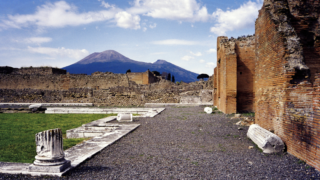
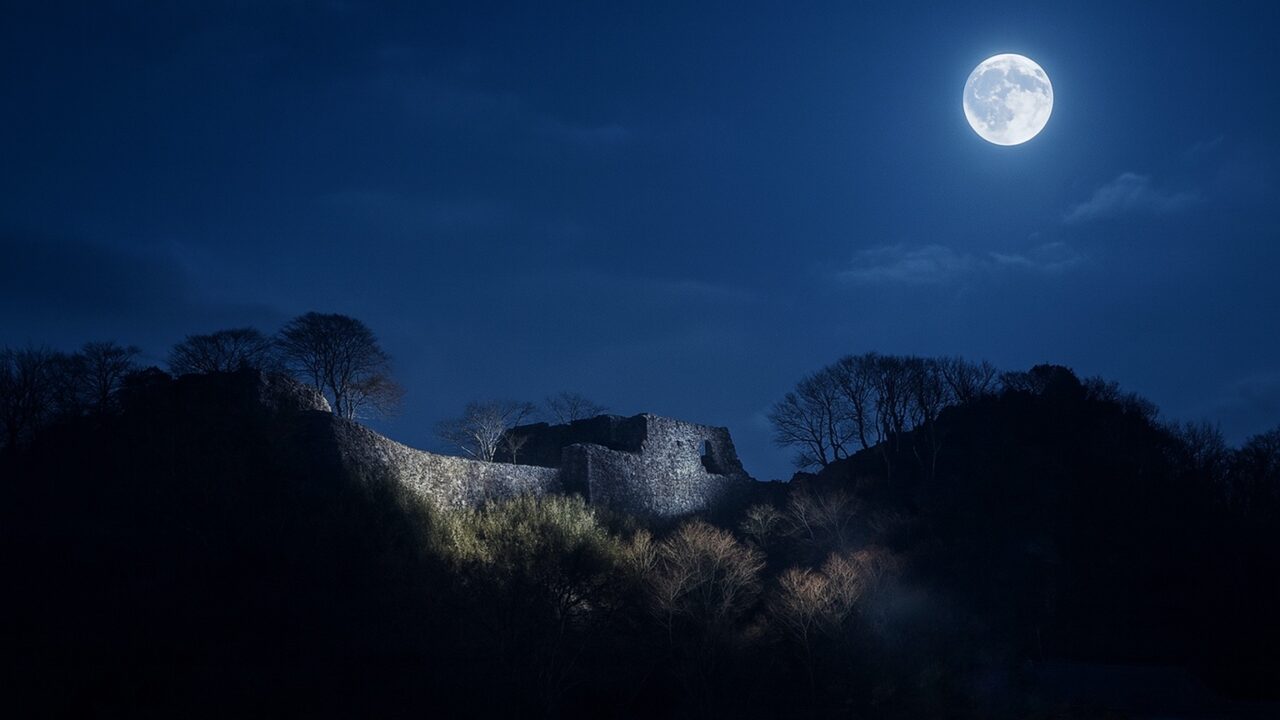
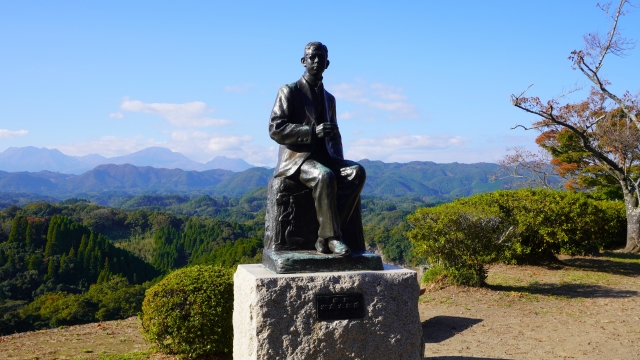
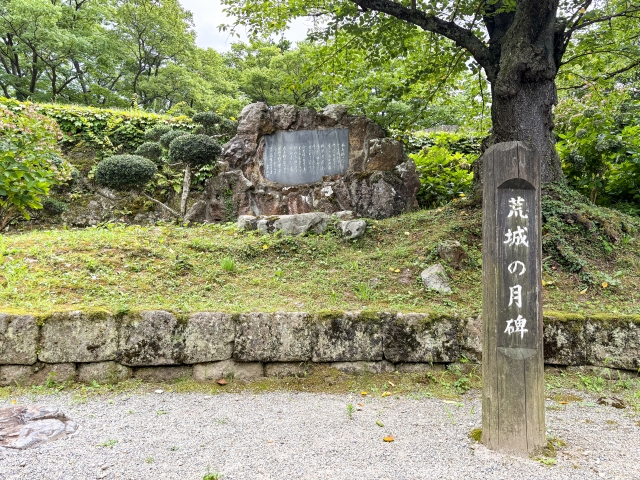
Rentaro is said to have drawn inspiration from Toyama Castle in Toyama Prefecture, where he spent his elementary school years, and from the ruins of Oka Castle in Taketa City, Oita Prefecture. At these ruined castle sites where only stone walls remained, he contemplated the contrast between past glory and present decay, expressing the passage of time and the Buddhist concept of impermanence through the light of the moon.
The original composition was an unaccompanied song in B minor, 4/4 time, consisting of 8 measures with an Andante tempo marking. Rentaro actively incorporated Western musical techniques—notably, he added a sharp (♯) to the note on the syllable “e” in “hana no e n” (flower banquet), creating a fresh, Western-influenced sound that did not exist in Japanese music at the time.
Arrangement by Kosaku Yamada
After Rentaro died of tuberculosis at the young age of 23 in 1903, Kosaku Yamada arranged the piece in 1917 (Taishō 6).
Yamada’s arrangement was commissioned by Tamaki Miura (1884–1946), an internationally renowned opera singer. When Miura performed “Kōjō no Tsuki” in America, audiences reportedly commented that “it doesn’t sound like a Japanese song.”
This was because the raised fourth degree of the minor scale in the original resembled characteristics of the Romani (Gypsy) scale.
To give the piece a more distinctly Japanese sound, Yamada made the following changes:
- Transposed from B minor to D minor (to suit Miura Tamaki’s vocal range)
- Removed the sharp (♯) from the note on “e” in “hana no en” (lowering it by a semitone for a more Japanese sound)
- Changed eighth notes to quarter notes and slowed the tempo (from Andante to Lento)
- Expanded the piece from 8 measures to 16 measures
- Added a piano accompaniment including a 4-measure introduction, making the total 24 measures
- Changed the tempo marking to “Lent, doloroso e cantabile” (slowly, with sorrow, in a singing manner)
When this arrangement was first published in 1918, the sharp remained as in the original, but it was removed in subsequent editions, resulting in the version widely performed today.
Through this process, Rentaro’s original—which boldly experimented with Western music—was refined by Kosaku Yamada into a more authentically Japanese-sounding piece, ultimately becoming a beloved Japanese song.
In the same year, 1917, Yamada also composed a grand piano solo piece titled Aishi – Variations on “Kōjō no Tsuki”, based on the song’s theme. This work expresses both nostalgia for past glory and a tribute to Rentaro, who passed away so young.
One notable feature of the piano accompaniment Yamada added is the octave melody with sixteenth-note upbeats (Auftakt) at the beginning of the introduction, creating a sense of gravity. This may represent a funeral march quality, similar to the variations mentioned above.
The Meaning of “Kojo no Tsuki”
“Kojo no Tsuki” literally means “the moon shining over a ruined castle.” The lyricist Bansui Doi is said to have drawn inspiration from a Chinese poem composed by the samurai Kenshin Uesugi (1530–1578), titled “Composed in Camp on the Thirteenth Night of the Ninth Month,” as well as from the Kokin Wakashū (Collection of Ancient and Modern Poems).
The lyrics depict a castle flourishing during spring banquets and warriors planting their swords in the ground on autumn battlefields. Through the unchanging moonlight shining on what is now a ruined castle, the song expresses the impermanence of rise and fall (eiko seisui).
The fusion of classical Japanese 7-5 syllable poetic form with Western melody brilliantly captured the sentiments of the Japanese people during the Meiji era—a period of transformation when the age of the samurai had come to an end.
“Kojo no Tsuki” Original Lyrics and Modern Japanese Translation
Verse 1
Original:
Haru koro no hana no en
Meguru sakazuki kage sashite
Chiyo no matsu ga e wake-ideshi
Mukashi no hikari ima izuko
Translation:
In spring, at a flower-viewing banquet in a lofty tower
Cups were passed around, moonlight reflected in the sake
We emerged through the branches of thousand-year pines
Where now is the radiance of those days?
Verse 2
Original:
Aki jin’ei no shimo no iro
Nakiyuku kari no kazu misete
Uuru tsurugi ni teri soishi
Mukashi no hikari ima izuko
Translation:
In autumn, the color of frost upon the military camp
Wild geese crying as they fly away, their numbers visible
The moonlight shone upon swords planted in the earth after battle
Where now is the radiance of those days?
Verse 3
Original:
Ima kojo no yowa no tsuki
Kawaranu hikari ta ga tame zo
Kaki ni nokoru wa tada kazura
Matsu ni utau wa tada arashi
Translation:
Now, the midnight moon over the ruined castle
For whom does its unchanging light shine?
Only ivy remains on the crumbling walls
Only the storm sings through the pines
Verse 4
Original:
Tenjo kage wa kawaranedo
Eiko wa utsuru yo no sugata
Utsusan tote ka ima mo nao
Aa kojo no yowa no tsuki
Translation:
Though the moon in the heavens remains unchanged
Rise and fall—such is the way of the world
Does it still shine to reflect this truth?
Ah, the midnight moon over the ruined castle
“Kojo no Tsuki” Continues to Be Sung Worldwide
“Kojo no Tsuki” is regarded as one of the greatest masterpieces of Japanese art song. It continues to be included in middle school music textbooks and sung to this day in Japan. In 2006, it was selected as one of the “100 Songs of Japan” by the Agency for Cultural Affairs and the Japan PTA National Council.
The song is well known internationally and has reportedly been translated into 42 languages. At the Chevetogne Abbey in Belgium, Kosaku Yamada’s arrangement is sung as a hymn. Jazz pianist Thelonious Monk (1917–1982) also recorded his interpretation under the title “Japanese Folk Song.”
The death of Rentaro Taki at just 23 years of age was a tremendous loss for Japanese music history. However, the song he left behind, “Kojo no Tsuki,” has become a timeless masterpiece that continues to resonate in the hearts of the Japanese people across generations.
引用:Youtube